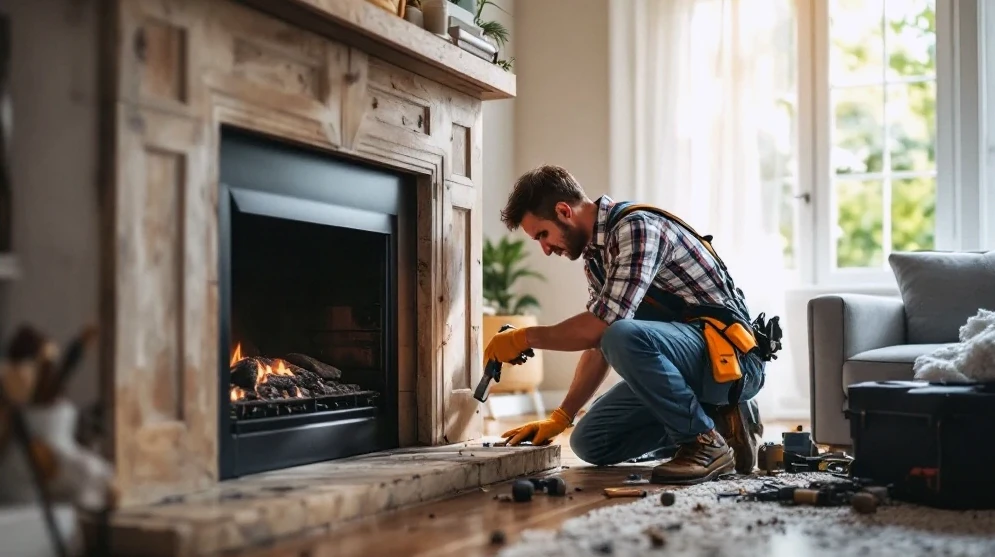
What is Gas Fireplace Repair and how does it work?
Gas fireplace repair is the process of diagnosing and fixing problems with the burner, gas valve, pilot assembly, thermocouple, or venting system so your fireplace lights safely and burns cleanly.
Think of it like a furnace that happens to look nice. The guts are similar: a gas line feeds a valve that opens when the pilot is lit and the thermocouple senses heat. If any part of that chain breaks, the fireplace either won't light, won't stay lit, or burns with a yellow, sooty flame that wastes gas and coats your glass with carbon.
In Montgomery, we see a lot of units that sat unused all summer. Humidity and dust build up inside the burner tube. Spiders or mud daubers nest in the pilot orifice. The thermocouple gets a thin layer of corrosion. These aren't big failures on their own, but together they kill the flame. A good repair tech cleans every component, checks gas pressure at the manifold, and tests the safety limit switches before calling it done.
Most homeowners think a gas fireplace is simpler than it is. They assume if the logs look fine and the gas is on, it should work. That misses the safety interlocks. The thermocouple and thermopile generate a tiny millivolt current that keeps the gas valve open. If that current drops below about 300 millivolts, the valve closes and shuts off the gas. That's a safety feature, not a failure. But it means a weak pilot flame or a dirty thermocouple looks like a dead fireplace when the problem is actually just a few thousandths of an inch of soot.
Repair work starts with the basics: is the gas valve turned on? Is the pilot lit? If the pilot lights but the main burner won't come on, the issue is usually the thermopile or the wall switch. If the pilot won't stay lit, it's the thermocouple or a blocked pilot orifice. A tech carries a millivolt meter and a set of small wrenches. They don't guess. They measure.
How Gas Fireplace Repair works, step by step
A repair visit follows a logical sequence: safety check first, then diagnosis of the gas and electrical system, then cleaning or replacement of the failed part, and finally a full test fire.
The first thing a tech does is shut off the gas at the valve and let the fireplace cool. Then they remove the glass, logs, and burner pan to expose the pilot assembly and gas valve. They check the gas line for leaks with a manometer or soapy water. If the line holds pressure, they move on to the electrical side.
They pull the thermocouple and thermopile out and test them with a multimeter. A good thermocouple should produce 25 to 30 millivolts with the pilot on. A thermopile should produce 500 to 800 millivolts. If either is below spec, it gets replaced. That's a common fix. The parts cost maybe 20 to 40 dollars, and the labor is about an hour.
Next they clean the pilot orifice. That's a tiny brass fitting with a hole the size of a needle. A piece of spider web or a grain of dust can block it. They use a small wire brush and compressed air. Then they reassemble everything, light the pilot, and watch the flame pattern. A healthy pilot flame should be blue with a slight yellow tip, and it should wrap around the thermocouple and thermopile. If it's lazy or orange, the gas pressure is off or the air shutter needs adjustment.
After the pilot is stable, they test the main burner. They turn the wall switch or remote on and watch the burner light. The flame should be blue at the base and lift evenly across all ports. If it's yellow or lifting off the burner, the air shutter needs adjustment or the burner ports are clogged. They adjust the air shutter, which is a metal plate at the burner inlet, and check the flame again.
Finally, they test the safety limits. They turn the fireplace off and on several times, let it run for 15 minutes, and check that the glass doesn't overheat and the venting isn't blocked. If the unit has a standing pilot, they confirm the pilot stays lit. If it's an intermittent pilot (electronic ignition), they verify the spark igniter fires and the gas valve opens within a few seconds. Then they clean the glass, replace the logs, and show you what they found.
Why Gas Fireplace Repair matters for your home
A broken gas fireplace isn't just an inconvenience; it can waste gas, create carbon monoxide risk, and damage your home's interior if left unrepaired.
A fireplace that burns with a yellow flame instead of a blue one is producing soot. That soot coats the glass, the logs, and the inside of the firebox. Over time it can stain the brick or stone surround and make the glass permanently hazy. More importantly, a yellow flame means incomplete combustion, which can produce carbon monoxide. Most modern units have a safety shutoff for that, but older ones don't.
In Montgomery, we have mild winters but cold snaps that make you want the fireplace. If your unit won't light when the temperature drops below freezing, you're stuck. A quick repair in October beats a frantic call on Christmas Eve. Most local repair companies get booked up two weeks out in December. If you wait until you need it, you might wait a while.
There's also the gas bill. A fireplace that runs but doesn't burn efficiently can use twice the gas it should. The pilot alone burns about 1,000 BTUs per hour. If the main burner is wasting gas because of a clogged burner or wrong air setting, you're paying for heat that goes up the flue instead of into the room. A tune-up pays for itself in a season or two.
And then there's the safety side. A gas valve that sticks open or a thermocouple that fails can let gas flow when the fireplace is off. That's a serious hazard. Gas accumulates in the firebox and can ignite with a spark. It's rare, but it happens. A yearly inspection catches those problems before they become emergencies.
Common problems and what causes them
Most gas fireplace problems fall into a few categories: pilot won't light, pilot won't stay lit, main burner won't come on, or flame looks wrong. Each has specific causes.
Pilot won't light. The most common cause is a blocked pilot orifice. Spiders and mud daubers love the small opening. A close second is a failed spark igniter. The electrode gets corroded or the gap closes up. If the igniter sparks but the pilot doesn't light, the gas isn't reaching the orifice. If there's no spark at all, the igniter or the module is dead.
Pilot lights but goes out when you release the control knob. That's almost always a bad thermocouple. The thermocouple is a copper tube that sits in the pilot flame and generates a small voltage. When it fails, the gas valve doesn't get the signal to stay open. A new thermocouple costs about 15 dollars and takes 20 minutes to replace. But sometimes the problem is simpler: the thermocouple is just loose. Tighten the nut at the valve and try again.
Main burner won't come on even though the pilot is on. That's usually the thermopile or the wall switch. The thermopile is a larger version of the thermocouple that powers the gas valve for the main burner. If it's weak, the valve won't open. A bad wall switch is also common. The switch gets dirty or the wires corrode. A multimeter will tell you which one it is in 30 seconds.
Flame is yellow, orange, or sooty. That means the gas-to-air ratio is off. The air shutter is too closed, or the burner ports are clogged with dust or spider webs. A tech opens the air shutter slightly until the flame turns blue. If the burner ports are clogged, they clean them with a brush and vacuum. Sometimes the logs are placed wrong and block the flame. That's an easy fix.
Fireplace won't turn off. That's a stuck gas valve or a shorted wall switch. The wall switch is the likely culprit. A switch that gets wet or has a bad wire can stay closed, sending constant power to the valve. Replace the switch first. If that doesn't work, the gas valve itself is bad and needs replacement, which means draining the gas line and swapping the valve.
Common questions about Gas Fireplace Repair
Frequently Asked Questions
How often should I have my gas fireplace serviced?
Once a year, before the heating season. In Montgomery, that means October or early November. A yearly check catches pilot issues, dirty burners, and gas leaks before they cause trouble.
Can I clean the glass myself?
Yes, but use a cleaner made for gas fireplace glass. Regular glass cleaner can leave a residue that etches the ceramic glass. Wipe it with a soft cloth and a little water. Don't use abrasive pads.
Why does my fireplace smell like gas when I first turn it on?
That's normal for the first few seconds. The gas is burning off dust and moisture in the burner. If the smell lasts longer than a minute or is strong, you might have a leak. Call a pro.
My pilot light keeps going out. Is it safe to keep relighting it?
If it goes out once or twice, it's probably a dirty pilot or a weak thermocouple. Relighting it is fine. But if it goes out every time, the thermocouple is failing and needs replacement. Don't ignore it.
How long does a gas fireplace last?
The firebox and logs can last 20 years or more. The gas valve, pilot assembly, and thermocouple are wear items that typically need replacement every 5 to 10 years. The burner itself can last 15 years if kept clean.
Do I need a carbon monoxide detector if I have a gas fireplace?
Yes. Every home with a gas appliance should have a CO detector on each floor. The fireplace has safety devices, but they can fail. A detector is cheap insurance.
Can I convert my wood fireplace to gas?
Yes, but it's not a simple swap. You need a gas line run to the firebox, a gas log set with a burner and valve, and proper venting. It's a job for a licensed gas fitter. Expect a full day of work.
Why does my gas fireplace make a popping noise?
That's usually the metal firebox expanding and contracting as it heats up and cools down. It's normal. If the noise is loud or accompanied by a smell, check for loose components or debris on the burner.
Is it safe to leave the gas fireplace on overnight?
Most modern gas fireplaces are safe to run while you sleep, but check your owner's manual. Units with a standing pilot are fine. Units with a blower should be turned off because the blower motor can overheat. Better to be safe and turn it off.
How much does a typical gas fireplace repair cost in Montgomery?
Costs vary based on the problem and the unit. A simple thermocouple replacement might run around 150 to 250 dollars. A gas valve replacement can be 400 to 600 dollars. The only way to get an exact figure is a free on-site quote.
Need gas fireplace repair in Montgomery? Get a free estimate today.
📞 256-207-5968