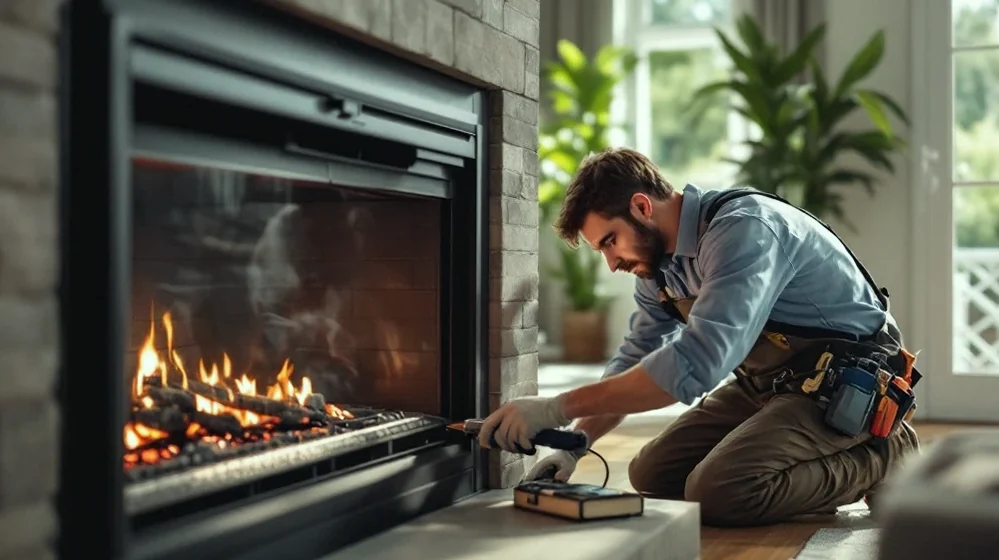
What is Gas Fireplace Tune-Up and how does it work?
A gas fireplace tune-up is a yearly cleaning and inspection of your gas logs, burner, pilot assembly, and venting to keep the unit burning clean and safe. A technician checks gas pressure, cleans soot and debris, and tests safety controls.
Think of it like an oil change for your car. You don't wait until the engine seizes. A tune-up catches small problems before they turn into a no-heat call on a freezing January night in Montgomery. The whole thing usually takes about an hour, maybe a bit more if your unit is an older model or hasn't been serviced in years.
A pro starts by turning off the gas and letting the unit cool. Then they pull out the logs, brush and vacuum the burner ports, and inspect the pilot assembly. They clean the glass and check the gasket seal. On a vented unit, they'll look at the flue and termination cap outside. On a vent-free unit, they test the oxygen depletion sensor.
The gas pressure gets checked with a manometer. If it's too high or low, the flame will be lazy or sooty. They also look at the thermopile and thermocouple, the two little sensors that tell the gas valve to stay open. A weak thermopile is the most common reason a fireplace won't light or keeps shutting off.
After cleaning and testing, they put everything back together, light the pilot, and run the main burner for a full cycle. They watch the flame pattern and make sure the logs are positioned right. Misplaced logs can cause carbon buildup or uneven burning.
Most Montgomery homeowners schedule this in the fall before the first cold snap. But if you run your fireplace a lot, like every evening from November through February, a mid-season check isn't a bad idea.
How Gas Fireplace Tune-Up works, step by step
A gas fireplace tune-up follows a specific sequence: shutdown, disassembly, cleaning, inspection, pressure test, reassembly, and a full burn test. Each step catches different potential problems.
Step one is safety. The technician shuts off the gas supply and waits for the unit to cool completely. If the fireplace has been running, the glass can be hot enough to burn skin. They also disconnect power if there's a blower or remote control system.
Next, the logs come out one at a time. The pro brushes and vacuums each one, then cleans the burner ports with a soft brush. A vacuum with a HEPA filter is used to pull out dust, pet hair, and any debris that settled over the summer. Soot buildup on the burner is a red flag. It means the gas-to-air ratio is off, and that needs fixing before the unit runs again.
The pilot assembly gets special attention. The orifice, the tiny hole where gas comes out, can get clogged with spider webs or lint. A clogged pilot won't stay lit. The technician cleans it with compressed air or a fine wire. Then they check the thermopile and thermocouple with a multimeter. If the readings are low, those parts get replaced.
Gas pressure is measured at the manifold with a manometer. Natural gas systems run around 3.5 inches of water column. Propane systems run around 10 inches. If the pressure is off, the technician adjusts the regulator or calls the gas utility. Low pressure gives a weak flame and poor heat. High pressure creates a tall, sooty flame that damages logs and glass.
The glass door is cleaned with a special non-abrasive cleaner. Regular glass cleaner leaves streaks and can damage the ceramic coating. The gasket around the door is inspected for cracks or flat spots. A bad gasket leaks air, which makes the fireplace drafty and less efficient.
For vented units, the flue and termination cap are inspected. The cap needs to be clear of leaves, bird nests, or wasp nests. A blocked cap can cause carbon monoxide to back up into the house. The technician also checks the vent run for any signs of rust or separation. For vent-free units, the oxygen depletion sensor is tested. That sensor shuts off the gas if oxygen levels drop too low.
Everything goes back together, the gas is turned on, and the pilot is lit. The main burner runs for at least 15 minutes. The technician watches the flame pattern, checks for yellow tipping, and makes sure the logs aren't sooting. They also test the remote control, thermostat, or wall switch to confirm it all works.
Why Gas Fireplace Tune-Up matters for your home
A yearly tune-up keeps your gas fireplace burning efficiently, prevents carbon monoxide leaks, and extends the life of the unit. It also saves you money on gas and avoids emergency repairs in the middle of winter.
Montgomery winters aren't brutal, but they get cold enough that a broken fireplace is a real inconvenience. A tune-up in September or October means you're ready when that first 30-degree night hits. It's a lot easier to schedule a checkup than to wait three days for a repair when every other house in town has the same problem.
Efficiency matters more than most people realize. A dirty burner or a weak pilot flame can waste 10 to 20 percent of the gas you're paying for. That's money going up the flue or out the chimney. A clean unit burns the gas completely, so you get more heat per cubic foot of natural gas or propane.
Safety is the main reason, though. A gas fireplace that isn't burning clean can produce carbon monoxide. The whole point of a tune-up is to catch a cracked heat exchanger, a blocked vent, or a sooty burner before they cause a problem. The technician brings a carbon monoxide detector and checks the area around the fireplace during the burn test.
Regular service also protects your warranty. Most manufacturers require annual maintenance to keep the warranty valid. If you skip a year and something fails, the replacement parts come out of your pocket. A tune-up receipt is proof you took care of it.
A well-maintained fireplace lasts longer too. The burner, logs, and gas valve are expensive to replace. Keeping them clean and adjusted means they'll run for 15 or 20 years instead of failing at year ten. That's a big deal if you plan on staying in your home.
There's also the comfort factor. A tuned-up fireplace lights right away, burns with a clean blue-orange flame, and puts out steady heat. No flickering, no smell, no clicking that won't stop. It just works.
Common problems and what causes them
The most common problems we see in Montgomery gas fireplaces are pilot won't stay lit, burner won't light, sooting on the glass, and a strong gas smell. Each one has a specific cause that a tune-up can fix.
Pilot won't stay lit is usually a dirty pilot orifice or a weak thermocouple. The thermocouple is a copper rod that sits in the pilot flame. If it's dirty or worn out, it doesn't send enough voltage to the gas valve to keep the pilot gas flowing. A tune-up includes cleaning the orifice and testing the thermocouple. If it's bad, it gets replaced. That's a cheap fix that solves 90 percent of no-pilot problems.
Burner won't light often comes down to a bad thermopile. The thermopile is a bigger sensor that generates voltage to open the main gas valve. It sits right next to the thermocouple. Over time, it builds up a layer of carbon or just wears out. A tune-up test tells you if the voltage is low. Replacing a thermopile is straightforward and usually costs less than a service call.
Sooting on the glass is almost always caused by the logs being in the wrong position. The logs are designed to direct the flame a certain way. If a log is shifted, the flame hits the glass instead of the ceramic fiber. That leaves a black film. Sometimes the gas pressure is too high, which makes the flame lazy and sooty. The technician adjusts the pressure and repositions the logs.
A strong gas smell when the fireplace is off means there's a leak somewhere. It could be a loose fitting, a cracked valve, or a bad connection at the gas line. A tune-up includes a leak check with a gas sniffer or soapy water. If a leak is found, the gas is shut off and the fitting is tightened or replaced. Never ignore a gas smell. Call a pro immediately.
Remote control or wall switch not working is usually a dead battery or a bad receiver. The receiver is a small box that picks up the signal from the remote. It can fail after a few years. A tune-up includes checking the batteries and testing the receiver. Sometimes the wiring between the receiver and the gas valve comes loose, which is an easy fix.
Yellow flames instead of blue are a sign of incomplete combustion. That means the gas isn't mixing with enough air. It can be caused by a dirty burner, a blocked air shutter, or low gas pressure. A tune-up cleans the burner and adjusts the air shutter. If the flame stays yellow, the technician checks the gas pressure and the venting.
Common questions about Gas Fireplace Tune-Up
How often should I get a tune-up?
Once a year, ideally in the fall before you start using the fireplace regularly. If you run it every day in winter, a mid-season check is smart.
Can I clean the logs myself?
You can dust them gently, but don't use water or any cleaner. The logs are fragile and can absorb moisture, which causes cracking. Leave the deep cleaning to a pro.
How long does a tune-up take?
About an hour for a standard unit. If there are problems like a clogged pilot or a bad thermopile, it can take two hours.
Will a tune-up fix a noisy blower?
Sometimes. The technician can clean the blower blades and lubricate the motor. But if the bearings are worn, the blower needs to be replaced.
Do I need a tune-up if I have a vent-free fireplace?
Yes. Vent-free units still need the burner cleaned and the oxygen depletion sensor tested. That sensor is a critical safety device.
What's the difference between a tune-up and a repair?
A tune-up is preventive maintenance. A repair is fixing something that's broken. A tune-up often catches problems before they need a repair.
Is a tune-up necessary for a fireplace I never use?
Yes, because spiders and dust can still clog the pilot and burner. If you ever try to light it, it won't work and could be dangerous.
Can I do the tune-up myself?
No. Gas work requires special tools and training. A mistake can cause a gas leak or carbon monoxide issue. Always hire a licensed technician.
Does a tune-up include cleaning the chimney?
No. A tune-up covers the gas components and the venting inside the house. A chimney sweep is a separate service for wood-burning fireplaces.
What if my fireplace is really old?
Older units often need more attention. The gas valve and pilot assembly may be worn. A tune-up can extend the life, but eventually parts will need replacing.
Frequently Asked Questions
How often should I get a tune-up?
Once a year, ideally in the fall before you start using the fireplace regularly. If you run it every day in winter, a mid-season check is smart.
Can I clean the logs myself?
You can dust them gently, but don't use water or any cleaner. The logs are fragile and can absorb moisture, which causes cracking. Leave the deep cleaning to a pro.
How long does a tune-up take?
About an hour for a standard unit. If there are problems like a clogged pilot or a bad thermopile, it can take two hours.
Will a tune-up fix a noisy blower?
Sometimes. The technician can clean the blower blades and lubricate the motor. But if the bearings are worn, the blower needs to be replaced.
Do I need a tune-up if I have a vent-free fireplace?
Yes. Vent-free units still need the burner cleaned and the oxygen depletion sensor tested. That sensor is a critical safety device.
What's the difference between a tune-up and a repair?
A tune-up is preventive maintenance. A repair is fixing something that's broken. A tune-up often catches problems before they need a repair.
Is a tune-up necessary for a fireplace I never use?
Yes, because spiders and dust can still clog the pilot and burner. If you ever try to light it, it won't work and could be dangerous.
Can I do the tune-up myself?
No. Gas work requires special tools and training. A mistake can cause a gas leak or carbon monoxide issue. Always hire a licensed technician.
Does a tune-up include cleaning the chimney?
No. A tune-up covers the gas components and the venting inside the house. A chimney sweep is a separate service for wood-burning fireplaces.
What if my fireplace is really old?
Older units often need more attention. The gas valve and pilot assembly may be worn. A tune-up can extend the life, but eventually parts will need replacing.
Need gas fireplace repair in Montgomery? Get a free estimate today.
📞 256-207-5968