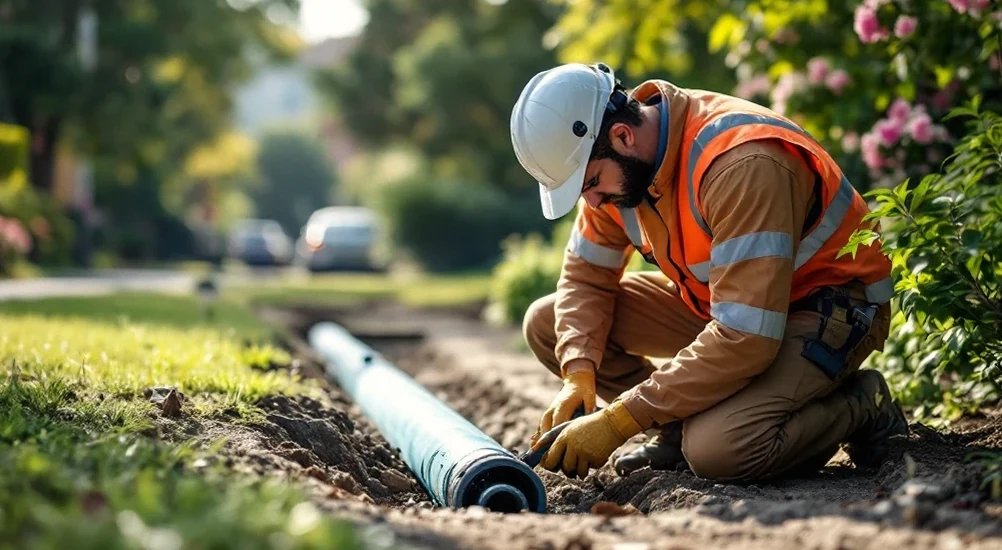
What is Gas Line Inspection and how does it work?
A gas line inspection is a thorough check of every foot of pipe, fitting, valve, and connection from the meter to your fireplace burner. A certified technician pressurizes the system, looks for leaks, corrosion, and damage, and ensures everything meets current safety codes.
Think of it as a physical for your gas system. The technician starts at the gas meter, checking the shutoff valve and the regulator. Then they follow the pipe all the way to the fireplace, inspecting every joint, every bracket, and every spot where the pipe passes through a wall or floor. They use a manometer to measure gas pressure and a gas sniffer to find even tiny leaks you would never smell.
In Montgomery, we see a lot of older homes with galvanized steel pipe that was installed decades ago. That pipe can corrode from the inside out, especially in the humid crawlspaces and basements common around Old Cloverdale and Capitol Heights. A visual inspection alone won't catch internal corrosion. That's why a proper inspection includes a pressure test: the system is sealed and pressurized to a specific level, then watched for any drop over time.
The whole process takes about an hour for a standard single-story home. A two-story house with a fireplace on the second floor takes longer because the crew has to access the attic and run the test from multiple points. If the fireplace hasn't been used in years, the technician will also check the burner orifice and the gas valve for debris and rust.
At the end, you get a written report that lists every issue found, from a minor fitting that needs tightening to a full pipe replacement. The technician will explain what each problem means and what it will take to fix it. No pressure, no scare tactics. Just the facts.
How Gas Line Inspection works, step by step
The process starts with a visual walkthrough of the entire gas line route, then moves to a pressure test and a leak search. The technician documents everything and gives you a clear report with photos and recommendations.
First, the technician shuts off the gas at the meter and at the fireplace. They open the fireplace door and remove the logs and burner assembly to access the gas line. This is where a lot of debris collects, especially in fireplaces that sit unused for months. A quick vacuum and brush-out is part of the inspection, not an upsell.
Next comes the visual inspection. The technician looks for signs of rust, dents, or kinks in the pipe. They check every fitting for looseness or signs of past leaks, like white crusty deposits around a joint. They also look at the flexible connector that goes from the rigid pipe to the fireplace. Those flex lines can rub against metal edges and develop pinhole leaks over time.
Then the pressure test. The technician attaches a manometer to the system and pressurizes it to about 8 inches of water column, which is standard for natural gas. They let it sit for 15 to 20 minutes. If the pressure holds steady, the system is tight. If it drops, they start isolating sections of pipe to find where the leak is.
After the pressure test, the technician uses an electronic gas sniffer to sweep every joint and fitting. This tool is sensitive enough to detect a leak smaller than a pinprick. In Montgomery's clay soil, underground gas lines can shift and crack, so the sniffer is also run along the pipe where it enters the house. A soap-and-water test on every fitting is a final double-check.
The last step is a functional test. The technician reconnects the gas, lights the fireplace, and watches the flame pattern. A lazy, yellow flame means the burner is getting too much gas or too little air. A sharp blue flame is what you want. They also check the thermocouple and the safety valve to make sure the fireplace shuts off automatically if the pilot goes out.
Why Gas Line Inspection matters for your home
A leaking gas line can fill your home with flammable gas, leading to a fire or explosion. Even a slow leak wastes money and can cause headaches, nausea, or worse. An inspection catches problems before they become emergencies.
Natural gas itself is odorless. The rotten egg smell you associate with a gas leak is actually a chemical called mercaptan that's added by the utility company. But if you live in an older home in the Garden District or near Huntingdon College, you might have a long gas line run with multiple joints. A leak in an unfinished basement or crawlspace might not produce a strong smell because the gas dissipates before it reaches you.
A slow leak can also raise your gas bill by 10 to 20 percent without you noticing. The fireplace might still light and burn, but you're paying for gas that's escaping into the soil or the attic. Over a year, that adds up. And if the leak is in a closed space like a chase or a soffit, the gas can accumulate and create a fire hazard.
Montgomery's weather is hard on gas lines. The freeze-thaw cycles in winter, even mild ones, can shift the ground and stress underground pipes. High humidity accelerates corrosion on exposed pipe in crawlspaces. And the clay soil around here is expansive, meaning it swells when wet and shrinks when dry, which can crack rigid pipe over time.
Insurance companies in Alabama are starting to ask about gas line inspections, especially on older homes. If you file a claim for a gas-related fire and your system hasn't been inspected in years, the adjuster will look hard at the condition of your pipes. A documented inspection every two to three years shows you maintained the system properly.
There's also the safety of anyone who works on your home. A plumber or electrician working in a crawlspace could bump a gas line and cause a leak. If the pipe is already corroded, that bump could be the last straw. An inspection identifies weak spots so you can reinforce or replace them before someone gets hurt.
Common problems and what causes them
The most common issues are loose fittings, corroded pipe, damaged flex connectors, and blocked burner orifices. Each has a specific cause and a straightforward fix, but ignoring them can turn a small problem into a big one.
Loose fittings are the number one cause of small leaks. They happen when the pipe wasn't tightened enough during installation, or when the house settles and the pipe shifts. A simple quarter-turn with a wrench is usually all it takes. But if the fitting is old and the threads are corroded, the whole joint may need to be replaced.
Corroded pipe is common in Montgomery because of the humidity. Black iron pipe rusts from the outside in when it's exposed to moisture. Galvanized pipe rusts from the inside out, which is harder to spot. A pipe that looks fine on the outside can have a pinhole leak on the inside. That's why a pressure test is essential, not optional.
Flex connectors are the braided stainless steel tubes that connect the rigid gas line to the fireplace. They're designed to flex, but they can rub against metal edges or get kinked during installation. Over time, the braiding wears through and a tiny leak develops. A good inspection includes checking the flex line for any signs of wear or contact with sharp metal.
Blocked burner orifices happen when dirt, dust, or spider webs get into the gas line. The fireplace might still light, but the flame will be uneven or sooty. A sooty flame produces carbon monoxide, which is a serious health risk. The fix is to remove the burner and clean the orifice with a small wire brush. This is a routine part of an inspection, not an extra charge.
Pilot light problems are another common finding. The thermocouple, which senses the pilot flame and tells the gas valve to stay open, can fail over time. If the pilot goes out and the thermocouple doesn't shut the gas off, you have a dangerous situation. A good inspection tests the thermocouple and replaces it if needed.
Common questions about Gas Line Inspection
Need gas fireplace repair in Montgomery? Get a free estimate today.
📞 256-207-5968