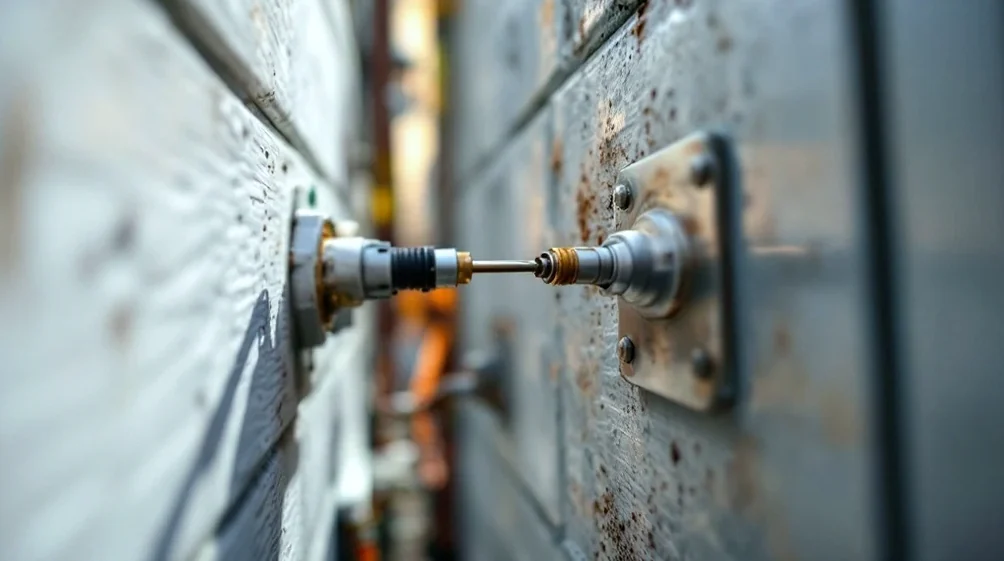
What is Thermocouple & Thermopile Repair and how does it work?
Thermocouple and thermopile repair means fixing or replacing the two safety sensors that keep your gas fireplace from leaking unburned gas. A bad thermocouple or thermopile is the most common reason a pilot light won't stay lit or the main burner won't fire.
Think of a thermocouple as a tiny safety guard. It sits right in the pilot flame and generates a small electrical voltage when it gets hot. That voltage tells the gas valve to keep the gas flowing. If the flame goes out, the thermocouple cools, the voltage drops, and the valve snaps shut. No gas, no risk.
A thermopile is basically a bigger, more powerful version of a thermocouple. It has multiple thermocouple junctions wired together, so it produces more voltage. In most gas fireplaces, the thermopile powers the main gas valve and the remote control or wall switch. If the thermopile fails, you might still have a pilot light but the main burner won't come on.
Repair usually means cleaning the sensor tip with fine sandpaper or replacing the part entirely. Thermocouples and thermopiles wear out over time. Heat cycles, corrosion, and soot buildup all take a toll. A simple cleaning might fix it for a season or two, but replacement is the only permanent fix.
In Montgomery, where we run our fireplaces from November through February, these parts get a solid workout. A thermocouple might last five to seven years. A thermopile can go a bit longer, maybe eight to ten years, but both will fail eventually. The good news is they are relatively cheap parts and easy to swap out for a pro.
Most homeowners don't realize that a weak thermopile can cause intermittent problems. The fireplace might work fine for days, then suddenly refuse to light. That's because the voltage output drops just below the threshold needed to open the gas valve. A multimeter reading tells the story fast.
How Thermocouple & Thermopile Repair works, step by step
A pro starts by turning off the gas and removing the fireplace screen and burner assembly. They test the thermocouple or thermopile with a multimeter, clean or replace the part, and then test the system before putting everything back together.
First, the gas valve gets shut off at the unit and sometimes at the main gas line. No shortcuts here. Then the glass front or screen comes off, followed by the logs and burner pan. Getting to the thermocouple and thermopile means pulling the pilot assembly, which is usually held by two small screws.
With the pilot assembly out, the tech inspects the tips. A thermocouple tip should be smooth and dark gray. If it's white, crusty, or covered in black soot, it needs cleaning or replacement. The thermopile looks like a small silver cylinder with two wires coming out. Same deal: clean it gently with 220-grit sandpaper or replace it.
Testing is where the real diagnosis happens. A good thermocouple should produce 25 to 30 millivolts when heated by the pilot flame. A thermopile should produce 300 to 750 millivolts. Anything lower means the part is weak. The tech uses a digital multimeter to get a precise reading right there on the workbench.
If the part tests bad, the old one gets unscrewed from the pilot bracket and the new one gets threaded in. The wires connect to the gas valve terminals, usually marked TH for thermocouple and TH/TP for thermopile. The tech tightens everything down, reassembles the fireplace, and relights the pilot.
The last step is a full test cycle. The tech lets the pilot run for two minutes to heat the sensors, then tries the main burner. They also test the safety shutdown by blowing out the pilot. The gas valve should close within 60 seconds. If it doesn't, something else is wrong, and the tech digs deeper.
Why Thermocouple & Thermopile Repair matters for your home
A faulty thermocouple or thermopile is a safety hazard and a comfort killer. It can leave you without heat on a cold Montgomery night or, worse, allow unburned gas to leak into your home.
Safety is the big one. A dead thermocouple means the gas valve stays open even if the pilot flame goes out. That sends raw natural gas or propane into your fireplace and eventually into the room. You might smell it, but not always. Gas is odorless; the smell is added, and it can fade over time.
Comfort matters. A fireplace that won't stay lit is useless when the temperature drops below freezing. Montgomery gets those cold snaps in January and February, and a broken fireplace means you're either cold or running your furnace harder. That hits the power bill.
Then there's the annoyance factor. A fireplace that lights sometimes but not others is maddening. You push the remote, nothing happens. You try again, it works. You never know if it's going to cooperate. That's almost always a thermopile on its last legs. Fixing it means reliable operation every time.
Ignoring a weak thermopile can also strain the gas valve. The valve needs a certain voltage to open. If the thermopile barely makes that voltage, the valve might chatter or fail to open fully. That can damage the valve over time, turning a forty-dollar part fix into a four-hundred-dollar valve replacement.
In Montgomery, where many homes have gas fireplaces as a secondary heat source, keeping the thermocouple and thermopile in good shape means you can actually use that fireplace when you need it. It's not a complicated repair, but it's one that matters for both safety and everyday use.
Common problems and what causes them
The most common issues are a pilot light that won't stay lit, a main burner that won't fire, or intermittent operation. These are almost always caused by a dirty, corroded, or worn-out thermocouple or thermopile.
Soot buildup is the number one cause. A gas fireplace burns clean when adjusted right, but if the air-to-fuel ratio is off, the flame gets lazy and leaves soot. That soot coats the thermocouple and thermopile tips, insulating them from the heat. The sensors don't get hot enough to generate the voltage they need.
Corrosion is another big one. Montgomery's humidity can be rough on metal parts. The thermocouple and thermopile sit in the pilot flame, which creates moisture as a byproduct of combustion. Over years, that moisture plus heat equals corrosion. The tips get pitted and the voltage drops.
Physical damage happens too. A homeowner cleaning the fireplace might accidentally bump the pilot assembly and bend the thermocouple or thermopile out of position. If the tip isn't sitting directly in the flame, it won't heat up properly. Even a quarter-inch off can cause problems.
Then there's simple age. These parts have a finite lifespan. A thermocouple is a thin wire that expands and contracts every time it heats and cools. After thousands of cycles, it fatigues and the internal connection weakens. The voltage drops until one day it just stops working.
Less common but worth knowing: a bad gas valve can mimic a bad thermocouple. If the valve itself is sticking or the solenoid is weak, the fireplace might act the same way. That's why a pro tests the voltage before replacing parts. Throwing a new thermocouple at a bad valve wastes time and money.
Common questions about Thermocouple & Thermopile Repair
Frequently Asked Questions
Can I clean the thermocouple myself?
Yes, you can try. Turn off the gas, remove the fireplace screen, and locate the pilot assembly. Gently rub the tip of the thermocouple with fine sandpaper or a Scotch-Brite pad. Be careful not to bend it. If cleaning doesn't work, the part likely needs replacement.
How do I know if it's the thermocouple or the thermopile?
If the pilot light won't stay lit, it's usually the thermocouple. If the pilot stays lit but the main burner won't come on, it's usually the thermopile. A multimeter test confirms either way. A pro can do that in under five minutes.
How much does a thermocouple or thermopile replacement cost in Montgomery?
The part itself costs between ten and forty dollars. With labor, a typical repair runs from one hundred fifty to three hundred dollars. The exact price depends on how easy it is to access the pilot assembly and whether any other parts need attention.
How long does the repair take?
A straightforward replacement takes about an hour. If the pilot assembly is hard to reach or the gas valve is in a tight spot, it can take up to two hours. The tech will give you a time estimate before starting.
Will a bad thermocouple waste gas?
Not directly. If the thermocouple fails, the gas valve shuts off completely. No gas flows. But if the thermocouple is weak and the pilot keeps going out, you might relight it multiple times, wasting a tiny amount of gas each time you purge the line.
Can I replace a thermocouple myself?
If you are handy with tools and comfortable working with gas, you can. You need to shut off the gas, remove the fireplace interior, unscrew the old thermocouple, and install the new one. But any mistake can cause a gas leak. Many homeowners prefer to call a pro.
Why does my fireplace work sometimes but not others?
That is the classic sign of a weak thermopile. It produces just enough voltage to open the gas valve on a good day, but not enough when conditions are marginal. A multimeter reading will show the voltage is borderline.
Do I need to replace both the thermocouple and thermopile at the same time?
Not required, but it is smart. If one has failed, the other is likely close behind. Replacing both at once saves you a second service call. The labor is the same either way since the tech already has the pilot assembly apart.
How often should I have my gas fireplace serviced?
Once a year, ideally before heating season. A pro will clean the pilot assembly, check the thermocouple and thermopile voltage, and make sure everything is safe. Annual service catches problems before they leave you cold.
What other problems can cause a pilot light to go out?
A drafty chimney can blow out the pilot flame. A clogged pilot orifice can make the flame too small. A bad gas valve can also cause the pilot to go out. A pro can diagnose all of these quickly.
Need gas fireplace repair in Montgomery? Get a free estimate today.
📞 256-207-5968