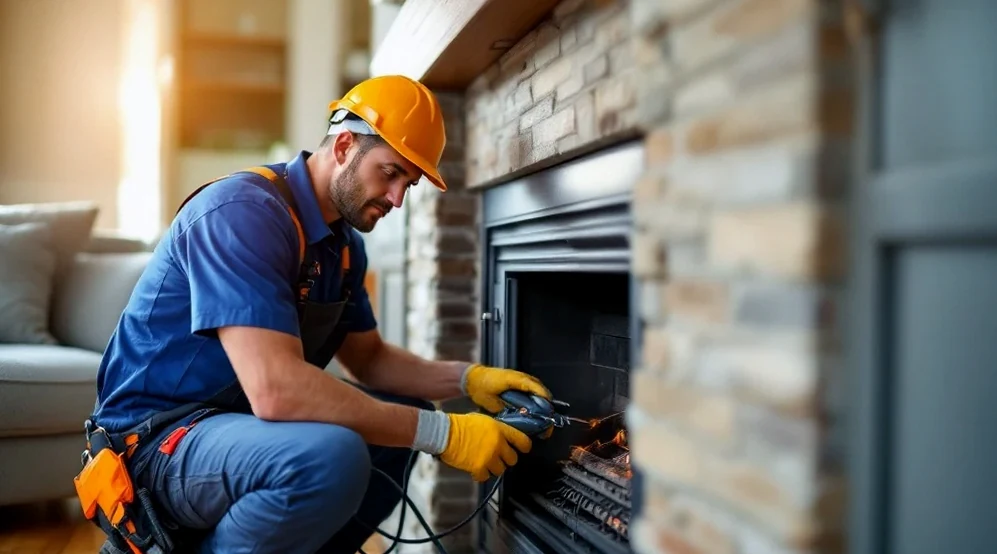
How does Gas Fireplace Repair work?
A technician comes to your house, diagnoses the problem, fixes or replaces the faulty part, tests everything, and shows you it's working safely. It's a straightforward process once you know what to look for.
Gas fireplaces are simpler than wood-burning ones, but they still have mechanical parts that wear out. The repair usually starts with a phone call where you describe what's happening: pilot won't stay lit, burner flames look yellow or lazy, remote stopped working, or you smell gas. That initial chat helps the tech bring the right parts and tools, which saves a return trip.
When the technician arrives, they'll run through a checklist. They look at the gas line connection, check the pressure at the manifold, inspect the thermocouple and thermopile, clean the burner ports, and test the ignition system. Most problems boil down to a dirty pilot assembly, a bad thermocouple, or a clogged orifice. In Montgomery's humid climate, spiders and dust love nesting in pilot tubes, which is a common cause of pilot outages.
Once the diagnosis is clear, the tech will explain what's wrong and how much the repair will cost. If the part is on the truck, the fix happens that day. If it's a specialty part for an older model, they may need to order it. Either way, you'll know the price before any work starts. No surprises.
After the repair, the technician fires up the fireplace, checks the flame pattern, and verifies that the safety shutoff works. They'll also show you how to relight the pilot yourself and what signs to watch for that mean it's time for a service call. Most techs will do a quick sweep of the glass and logs too, just as a courtesy.
Step-by-step: what to expect
Expect a call to schedule, a diagnostic visit, a clear explanation of the issue and cost, the actual repair, and a final safety test. The whole thing usually takes one to two hours for common problems.
Step one is the call. You'll talk to a dispatcher who asks a few questions: make and model of your fireplace, what year it was installed, and exactly what it's doing or not doing. If you don't know the model, that's fine; they'll look it up when the tech gets there. But having the model number handy can speed things up.
Step two is the diagnostic visit. The technician arrives in a marked van, sets up drop cloths if the fireplace is in a carpeted room, and starts checking components. They'll pull the glass panel, remove the logs, and access the burner assembly. This is where they find the root cause. A multimeter checks the thermopile voltage. A manometer tests gas pressure. They might clean the pilot orifice with a small wire brush or blow out debris with compressed air.
Step three is the estimate. The tech shows you the bad part, explains why it failed, and gives you a firm price to fix it. If the repair is straightforward, like swapping a thermocouple, the price is usually on the lower end. If the gas valve itself is bad, that's a bigger job and costs more because the valve is expensive and the labor involves careful gas line work.
Step four is the repair. The tech shuts off the gas, disconnects the faulty part, installs the new one, reconnects everything, and turns the gas back on. They use pipe dope or thread tape on gas fittings, and they always leak-test with a soapy water solution. If you see bubbles, they fix the connection until it's tight.
Step five is the test. The fireplace gets lit and runs for at least ten minutes. The tech checks the flame height, color, and pattern. They make sure the remote or wall switch works. They test the safety shutoff by blowing out the pilot to confirm the gas stops flowing. Then they clean up, put the logs and glass back, and walk you through what they did.
One thing that catches some homeowners off guard: if your fireplace hasn't been serviced in years, the tech might find more than one issue. A pilot that won't light could also have a clogged burner orifice from dust. That's not a upsell, it's a real problem. A thorough tech will tell you about all the issues they see, even if you only fix the main one today.
How long does Gas Fireplace Repair take?
Most repairs take one to two hours from arrival to completion. Simple fixes like cleaning a pilot assembly or replacing a thermocouple are on the shorter end. A gas valve replacement can take two to three hours.
The biggest time variable is diagnosis. A fireplace that won't light at all usually gets diagnosed fast, because the problem is almost always electrical or gas flow related. A fireplace that lights but then goes out after a few minutes takes a bit longer because the tech has to watch the sequence and measure voltages while it's running.
Parts availability is the other wild card. If the tech carries the part on the truck, the repair is done that day. If the part needs to be ordered, you're looking at a second visit. Most common parts like thermocouples, thermopiles, igniters, and pilot assemblies are stocked on the truck. Gas valves and control modules for older units often have to be ordered.
The age of your fireplace matters. A unit from the 1990s or early 2000s may have discontinued parts. The tech can sometimes retrofit a modern equivalent, but that takes extra time and may require modifying the gas line or wiring. A 2005 model with a bad control module might need a three-hour repair if the tech has to rewire the new module to match the old use.
Montgomery's weather matters. In January, when everyone's fireplace is running, repair calls pile up. A same-day visit might not be possible. In summer, when fireplaces sit idle, the schedule is wide open and the tech can usually come the same or next day. If you call in July with a pilot that won't light, you'll likely get a next-day appointment and a quick fix.
One more thing: if the repair involves running a new gas line or moving the fireplace, that's a different job entirely and takes half a day or more. But that's an installation or relocation, not a repair. For a standard repair on an existing fireplace, count on one to two hours.
Common questions about the Gas Fireplace Repair process
Frequently Asked Questions
Why won't my pilot light stay lit?
The most common cause is a dirty pilot orifice or a failing thermocouple. In Montgomery's humid climate, dust and spider webs can clog the tiny pilot opening, which makes the flame weak and unable to heat the thermocouple enough to keep the gas valve open. A technician can clean the orifice and test the thermocouple in about 15 minutes.
Is it normal to smell gas when the fireplace is off?
No. You should never smell gas when the fireplace is off. That could mean a leak at a fitting, a cracked gas line, or a valve that isn't sealing fully. Turn off the gas at the shutoff valve, open a window, leave the house, and call a professional from outside. Do not flip any light switches or use your phone inside.
How often should I have my gas fireplace serviced?
Once a year, ideally before you start using it in the fall. Annual service catches small problems like a dirty pilot or low thermopile voltage before they leave you without heat in January. A typical service includes cleaning the burner, checking gas pressure, testing safety devices, and inspecting the venting system.
Can I repair a gas fireplace myself?
I would not recommend it. Gas work is dangerous if you don't know what you're doing. A mistake can cause a gas leak, carbon monoxide poisoning, or a fire. Even simple things like cleaning the pilot assembly require the right tools and knowledge to avoid damaging the orifice. Leave it to a licensed professional.
Why are my flames yellow instead of blue?
Yellow flames mean incomplete combustion. That's usually caused by a dirty burner, a clogged air shutter, or debris on the logs. A gas fireplace should burn with mostly blue flames with just a hint of yellow at the tips. Yellow flames are inefficient and can produce soot that stains your glass and logs.
How much does a gas fireplace repair cost in Montgomery?
Typical repairs range from $150 to $400 for common issues like a bad thermocouple or a dirty pilot. More involved repairs like a gas valve replacement can run $500 to $800. The only way to get an exact price is a free on-site quote, because the cost depends on the specific part and how accessible your fireplace is.
My remote stopped working. Is it the remote or the fireplace?
First, replace the batteries in the remote and the receiver unit (usually located behind the lower panel of the fireplace). If that doesn't work, the receiver module might be bad, or the wiring could be loose. A tech can test the receiver and remote in a few minutes with a multimeter.
Do I need to turn off the gas during a repair?
Yes, the technician will shut off the gas at the fireplace's shutoff valve before doing any work. They'll turn it back on and leak-test everything before they leave. You do not need to shut off gas to the whole house unless the tech asks you to, which is rare.
What should I do if my gas fireplace won't turn on at all?
Check the obvious things first: is the gas valve turned on? Is the pilot light lit? Are the batteries in the remote or wall switch fresh? If those are all fine, the problem could be a dead thermopile, a bad gas valve, or a faulty ignition module. Call a technician to diagnose it.
How long will a repaired fireplace last?
A well-maintained gas fireplace can last 15 to 20 years. Individual parts like thermocouples and igniters wear out every 5 to 10 years and are easy to replace. The gas valve and burner assembly usually last the life of the unit if kept clean. Annual service is the best way to maximize lifespan.
Need gas fireplace repair in Montgomery? Get a free estimate today.
📞 256-207-5968