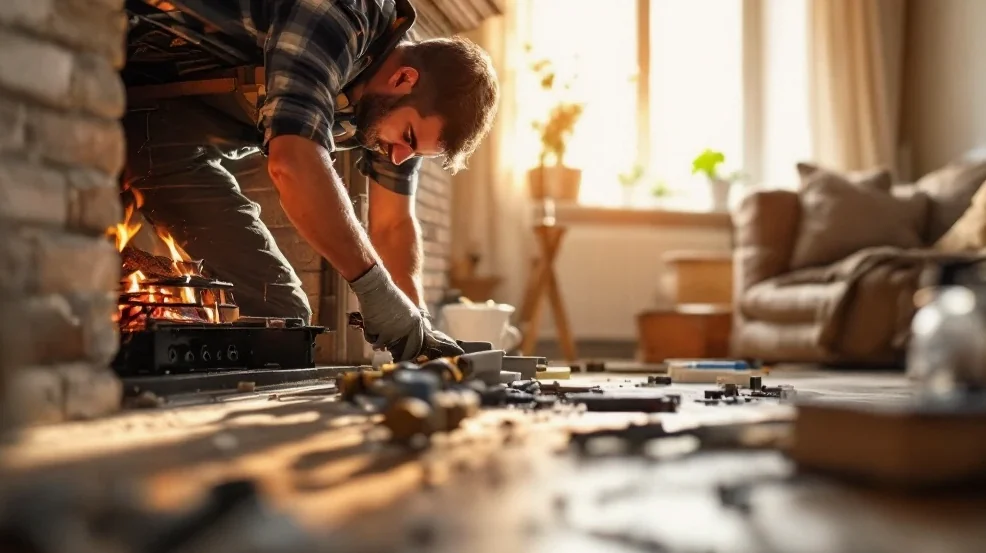
What is Gas Fireplace Repair and how does it work?
Gas fireplace repair is the process of diagnosing and fixing problems with your gas fireplace, from pilot lights that won't stay lit to faulty gas valves or broken thermocouples. It's not a DIY job for most homeowners.
A gas fireplace looks simple enough. You flip a switch or push a button, and flames appear. But behind that wall or firebox, there's a gas line, a burner assembly, a pilot system, and safety controls that all have to work together. When one piece fails, the whole thing stops or behaves dangerously.
In Montgomery, we see a lot of gas fireplaces that were installed in the 1990s and early 2000s, especially in neighborhoods like Old Cloverdale, East Montgomery, and around the newer developments near Taylor Road. These units are reaching the age where seals dry out, thermocouples wear down, and gas valves start sticking.
Repair work usually involves cleaning, adjusting, or replacing specific components. A technician will test gas pressure, inspect the burner for soot or debris, check the pilot flame pattern, and verify that safety switches are working. They won't just swap parts until something works. They'll trace the problem to its source.
Most repairs cost between $150 and $400 for common issues like a bad thermocouple or a dirty pilot assembly. A gas valve replacement can run $500 to $800. Those are typical ranges, and the only way to get an exact number is a free on-site quote. Larger units, two-story installations, or units that haven't been serviced in years often land toward the upper end.
The key thing to understand is that gas fireplace repair is not like fixing a toaster. You're dealing with natural gas or propane, a flammable fuel that can leak or build up inside your home. That's why licensed, insured technicians are the only safe choice. A bad repair can lead to carbon monoxide poisoning or a gas explosion. It's rare, but it happens.
How Gas Fireplace Repair works, step by step
A gas fireplace repair starts with a thorough inspection, then moves to diagnosis, cleaning, and finally replacement of any failed parts. The whole process usually takes one to three hours.
First, the technician turns off the gas supply and lets the fireplace cool completely. No one works on a hot unit. Then they remove the glass front, logs, and burner cover to get a clear view of the firebox and all components inside.
Next comes the inspection. The technician checks the pilot assembly for debris or corrosion. They look at the thermocouple and thermopile, which are small safety devices that sense heat and keep the gas valve open. If either is dirty or worn, the pilot won't stay lit. They also inspect the burner ports for blockages from dust, spider webs, or rust flakes.
After the inspection, the technician tests the gas pressure at the valve. Low pressure can cause a weak flame or make the burner hard to light. High pressure can damage the burner and create a dangerous situation. They adjust the pressure regulator if needed.
Then comes cleaning. The technician brushes out the burner ports, wipes down the pilot assembly, and vacuums any debris from the firebox. They also clean the glass with a special cleaner, because a dirty glass can make the flame look weak or discolored.
Finally, they replace any faulty parts. A bad thermocouple costs around $20 to $40 for the part, but the labor and service call bring the total to $150 to $250. A gas valve replacement is more involved and runs $500 to $800. The technician will show you the old part and explain why it failed before they install the new one.
Before they leave, they'll relight the pilot, check for gas leaks with a sniffer or soap solution, and run the fireplace through a full cycle. They'll also show you how to operate it safely and answer any questions you have.
Why Gas Fireplace Repair matters for your home
A properly working gas fireplace keeps your home warm, reduces your heating bill, and most importantly, prevents carbon monoxide leaks and gas explosions. Ignoring a small problem can turn into a big safety hazard.
Montgomery winters aren't brutal like up north, but we get plenty of nights in the 20s and 30s. A gas fireplace can take the chill off a room without running the central furnace. That saves money on your gas bill. But if the fireplace is blowing yellow flames, sooting up the glass, or refusing to light, you're not getting that benefit.
Safety is the real reason to stay on top of repairs. A gas fireplace that doesn't burn cleanly can produce carbon monoxide. That's a colorless, odorless gas that can make you sick or worse. A properly maintained fireplace should only produce a small amount of CO, but a clogged burner or misadjusted air shutter can spike those levels.
There's also the risk of a gas leak. A loose fitting, a cracked valve, or a worn seal can let gas escape into your home. Natural gas has a sulfur smell added so you can detect it, but propane is heavier and can pool in low spots. Either way, a leak is a serious emergency.
Regular repair and maintenance also extends the life of your fireplace. A unit that gets cleaned and inspected every year or two will last 20 years or more. One that's ignored might fail in 10. That's a $2,000 to $4,000 replacement cost you can avoid with a simple $150 to $300 service call.
In neighborhoods like Capitol Heights, Dalraida, and the newer developments off Vaughn Road, we see fireplaces that have been sitting unused for years. The owners try to fire them up on the first cold night and nothing happens. That's when they call, frustrated and cold. A little annual attention prevents that.
Common problems and what causes them
The most common gas fireplace problems are a pilot light that won't stay lit, a burner that won't ignite, yellow or sooty flames, and a fireplace that turns off by itself. Each has a specific cause.
A pilot light that won't stay lit is usually a bad thermocouple. That's a small copper rod that sits in the pilot flame. When it gets hot, it sends a tiny electrical signal to the gas valve to keep the gas flowing. If the thermocouple is dirty, bent, or worn out, it won't send that signal, and the gas valve closes. The pilot lights, then goes out as soon as you release the button.
A burner that won't ignite at all often points to a problem with the ignition system. Some fireplaces use a standing pilot that lights the burner when you turn it on. Others use an intermittent pilot that sparks only when needed. If the spark igniter is broken or the electrode is dirty, no spark means no flame. A simple cleaning sometimes fixes it, but a replacement igniter runs $100 to $200 installed.
Yellow or orange flames instead of clean blue ones mean incomplete combustion. That's usually caused by a dirty burner, a blocked air shutter, or a gas pressure problem. Yellow flames produce soot, which can coat your glass, logs, and the inside of the firebox. Over time, that soot can clog the burner ports and make the problem worse. A professional cleaning and adjustment typically solves it.
A fireplace that turns off by itself after running for a while is often a safety feature kicking in. The unit has a high-limit switch that shuts the gas off if the firebox gets too hot. That can happen if the glass is blocked, the ventilation is poor, or the fan isn't working. It can also be a failing thermopile that doesn't generate enough voltage to keep the gas valve open.
Less common but serious issues include a gas valve that sticks open or closed, a cracked heat exchanger, or a gas leak at a fitting. These need immediate attention from a licensed technician. If you smell gas, leave the house and call 911 or your gas company from outside. Do not try to fix a gas leak yourself.
Common questions about Gas Fireplace Repair
Need gas fireplace repair in Montgomery? Get a free estimate today.
📞 256-207-5968